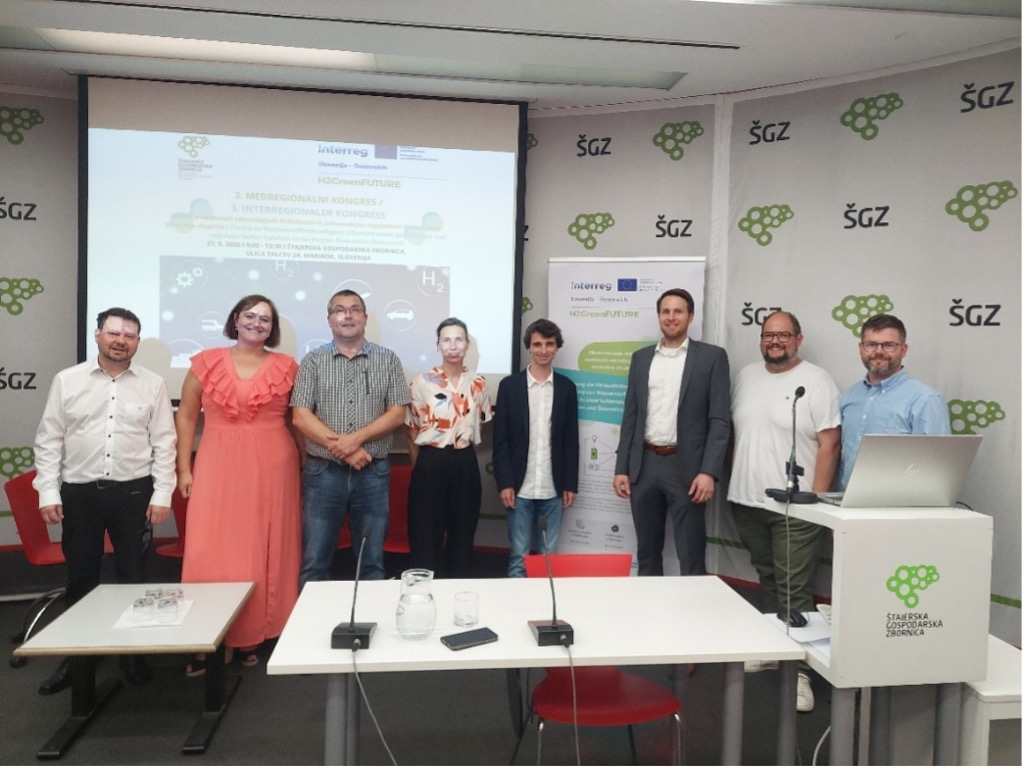
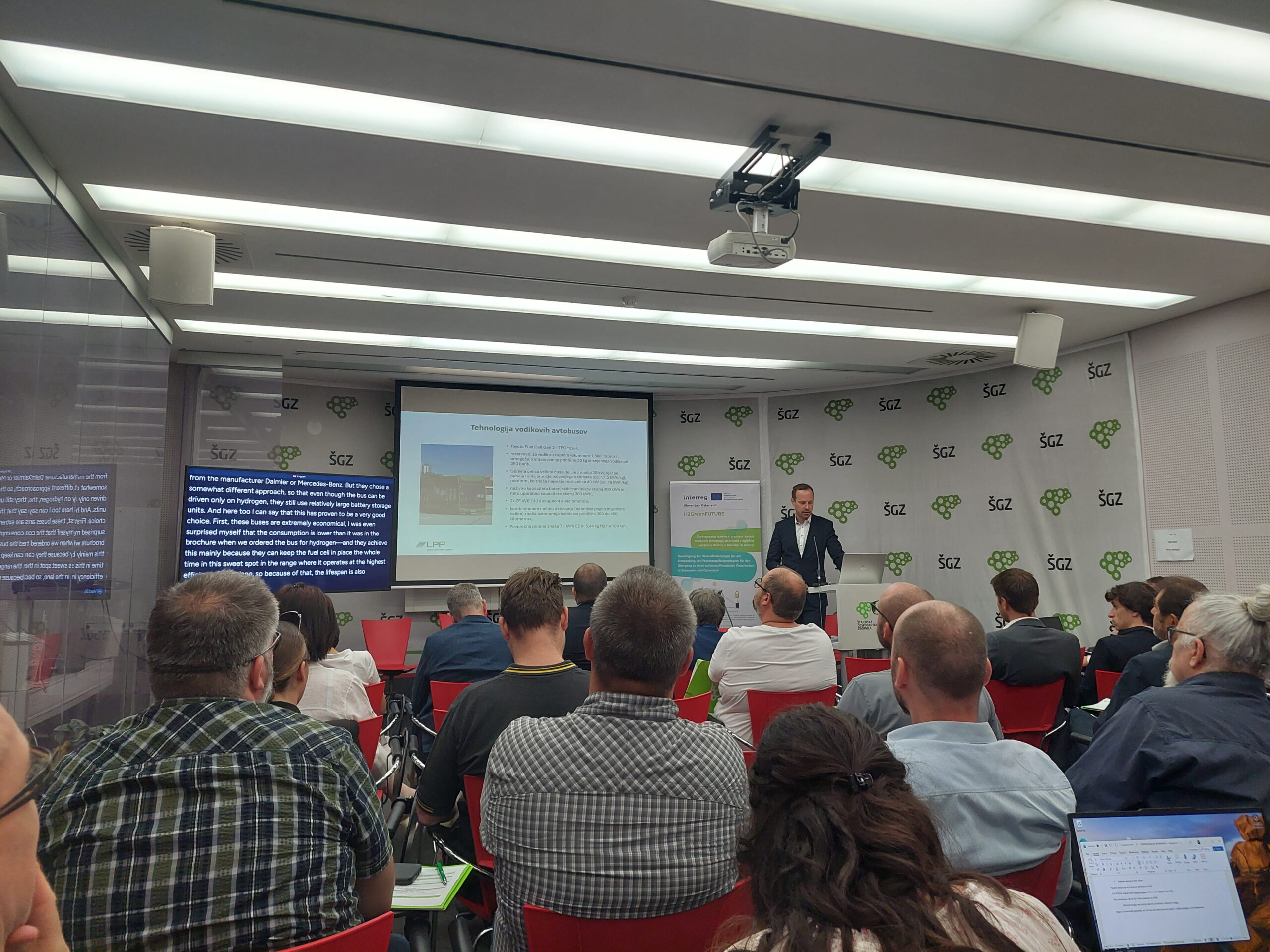
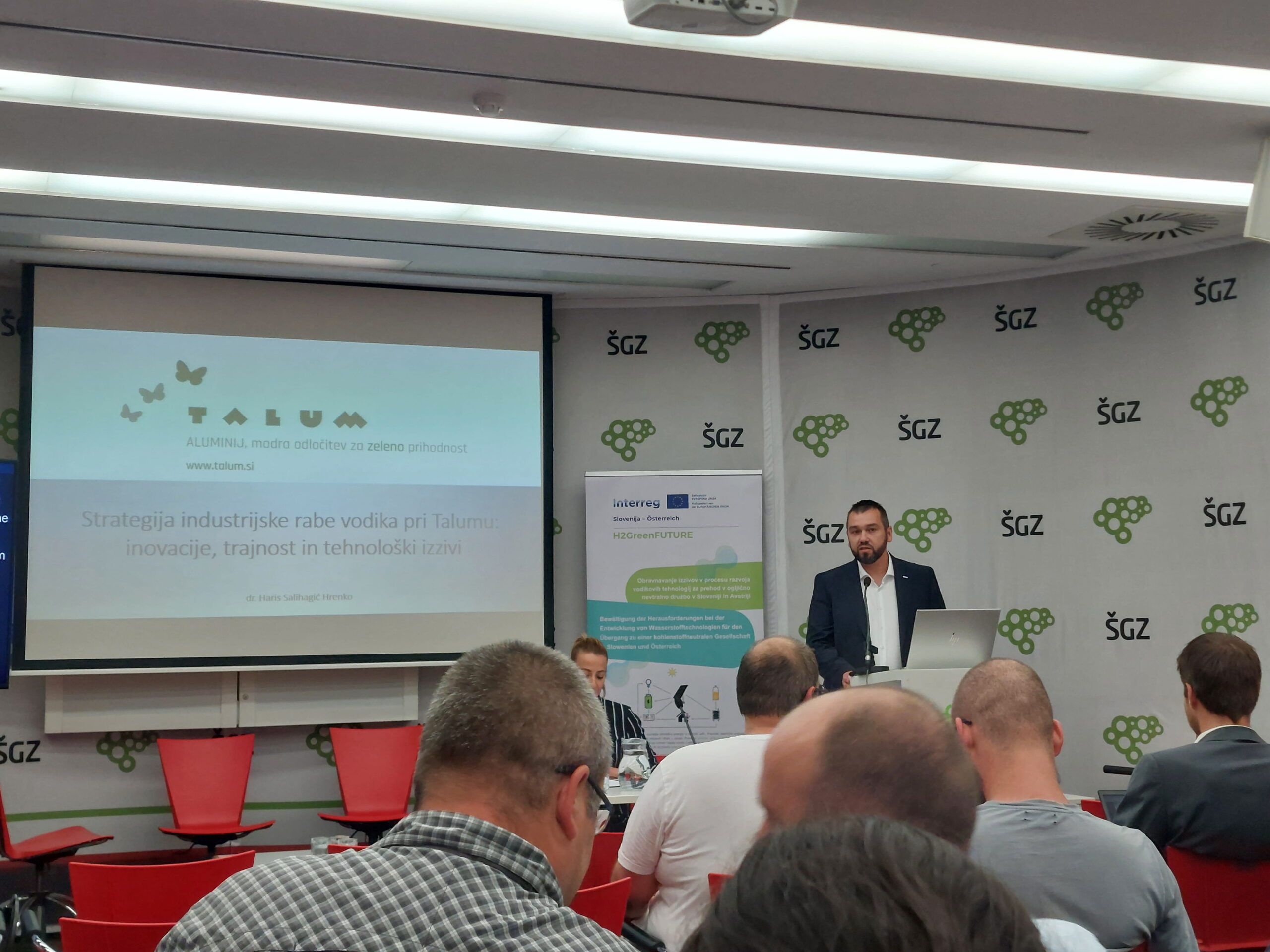
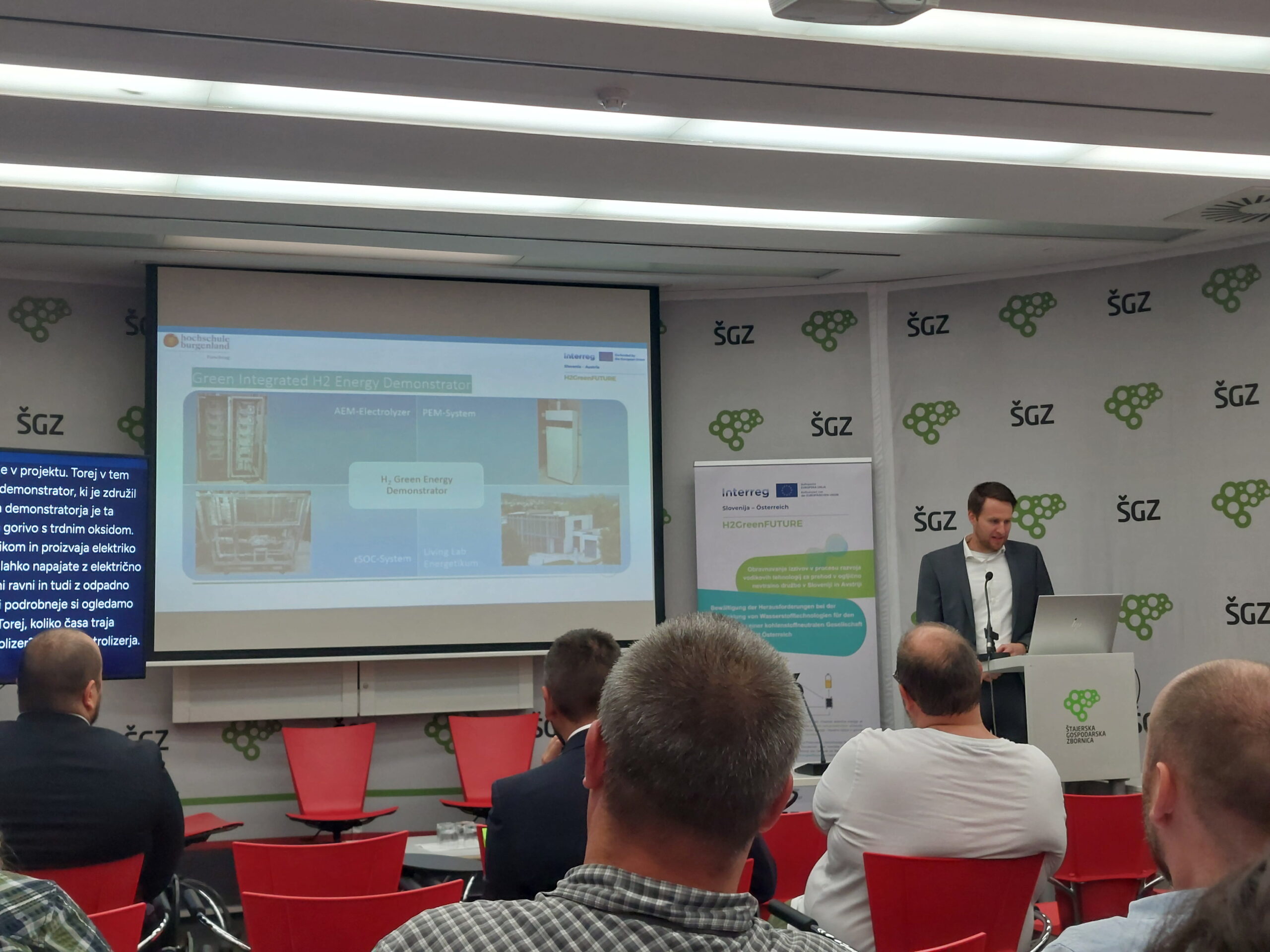
27 May 2026 – The H2GreenFUTURE 3rd interregional congress, titled Hydrogen Technologies: Opportunities and the Legislative-Regulatory Framework in the Slovenia–Austria Region, was held at the premises of the Styrian Chamber of Commerce in Maribor (Slovenia). The event focused on the development of hydrogen technologies and their legislative and regulatory framework in the Slovenia–Austria region. The congress brought together representatives from industry, research institutions, public administration, and the energy sector, who discussed key challenges and opportunities of the hydrogen economy. The event was organized by the Styrian Chamber of Commerce (ŠGZ) within the Interreg SI-AT project H2GreenFUTURE that is coordinated by the National Institute of Chemistry.
The Interreg SI-AT project H2GreenFUTURE (2023–2026) focuses on the development of hydrogen technologies as a key tool for transitioning to a low-carbon society. Its goal is to establish a cross-border innovation ecosystem involving industry, science, the public sector, and society, and to support the development of infrastructure, knowledge, and legislative solutions. Key project outcomes include:
- pilot cross-border projects for hydrogen use,
- development of a so-called regulatory sandbox for testing legislation,
- strengthening the competencies of companies and the educational system,
- preparation of strategic guidelines for developing the hydrogen ecosystem in the region.
The H2GreenFUTURE project therefore represents an important platform for connecting stakeholders and exchanging best practices in the field of sustainable energy transition.
Focus on legislation, practice, and future solutions
The congress program was divided into two thematic sections. The first covered legislation and regulation in Slovenia and the EU, while the second focused on presenting best practices and industrial applications of hydrogen. All participants were welcomed at the opening by the Director of the Styrian Chamber of Commerce, Ms. Aleksandra Podgornik, M.A.
Dr. Vlasta Krmelj from the Energy and Climate Agency for Podravje presented the role of regional energy agencies in accelerating hydrogen projects. These agencies serve as entry points where stakeholders can obtain all relevant information in one place and are also involved in implementing local energy projects. She emphasized that the green transition depends on people and that regional energy agencies achieve strong results in supporting individuals and coordinating these projects. She also stressed that citizens and the wider public should be included in the preparation of new energy projects at an early stage.
Next, Mr. Stane Merše, M.Sc., from the Jožef Stefan Institute presented activities related to the preparation of an Action Plan to achieve hydrogen-related targets within the National Energy and Climate Plan (NECP). He outlined projections for hydrogen consumption and production in Slovenia and presented the work carried out to develop a comprehensive support environment for establishing a hydrogen ecosystem. He stressed that ensuring domestic energy sources will be crucial in the future and expressed the view that hydrogen will become a key element in ensuring a reliable, safe, and resilient energy supply in Slovenia.
The first section concluded with a presentation by Davor Rašič from the Ministry of the Environment, Climate and Energy (MOPE), who outlined the legislative and regulatory framework for hydrogen, as well as key strategic documents in Slovenia and the EU. He noted that a revision of the hydrogen strategy is expected soon. Slovenia is actively preparing its hydrogen action plan and is in the process of developing a support scheme for the entire renewable energy sector.
Examples from practice
In the second part, experts presented concrete examples of hydrogen use in practice, from the development of the hydrogen ecosystem in Ljubljana municipality, to hydrogen use in public transport and energy infrastructure, as well as industrial strategies and the role of education and research in technological development.
Mr. Srečko Trunkelj from Energetika Ljubljana presented the Municipality of Ljubljana’s plans to establish hydrogen production and storage, while Dr. Rok Vihar from Ljubljana public transport company LPP presented comprehensive plans for introducing and using hydrogen in urban public transportation. Dr. Nada Petelin Sindičič from ELES – national electricity transition operator presented a concept developed together with PLINOVODI – national gas transition operator regarding the use of hydrogen technologies for critical energy infrastructure in Slovenia.
After a short break, Associate Professor Dr. Mitja Mori from the Faculty of Mechanical Engineering at the University of Ljubljana presented their role and the importance of sustainability in the development of hydrogen technologies, with a focus on dynamic modelling of energy systems. Dr. Haris Salihagič Hrenko from aluminium company Talum presented the role of hydrogen technologies in reducing CO₂ emissions in secondary aluminium production, while Dr. Jerneja Sedlar from the Milan Vidmar Electric Power Research Institute (EIMV) discussed the deployment of hydrogen technologies and their role in the green transition and energy independence. All speakers highlighted the challenge of securing hydrogen off-takers, which is crucial in this early development phase.
Experts from Austria then presented practical examples of hydrogen applications ranging from mobility and energy to industrial processes and education. Cristian Seidl from Hochschule Burgenland highlighted the role of hydrogen in decarbonization, provided a comparative analysis of hydrogen production systems (AEL, PEM, AEM, SOEC/rSOC), and discussed the challenges of building their pilot rSOC hydrogen system (H2 Green Demonstrator) in the Energetikum Lab in Pinkafeld. He concluded with key guidelines for implementing hydrogen systems in real-world conditions. The final speaker, Berndt Alexander from FH Kärnten, emphasized the importance of education in hydrogen technologies to bring them closer to the public. FH Kärnten focuses on developing training for various target groups, from pupils and students to entrepreneurs and teachers.
The event concluded with a roundtable discussion where experts addressed the establishment of a comprehensive hydrogen ecosystem, regulatory challenges, and development opportunities in the wider region.
The 3rd H2GreenFUTURE interregional congress confirmed that connecting knowledge, industry, and policy is essential for a successful green transition. By promoting innovation, developing an appropriate regulatory environment, and strengthening competencies, the project directly contributes to building a competitive and sustainable economy in Slovenia, Austria, and the wider region.
More information is available on the Hydrogen Center platform website:
https://hydrogen-center.eu/h2greenfuture/ or on LinkedIn at @h2greenfutureproject. The H2GreenFUTURE project is coordinated by the National Institute of Chemistry and co-financed by the European Regional Development Fund within the Interreg SI-AT programme. The project leader at the National Institute of Chemistry is Dr. Blaž Likozar (blaz.likozar@ki.si), and the project is implemented at the Department of Catalysis and Reaction Engineering.